
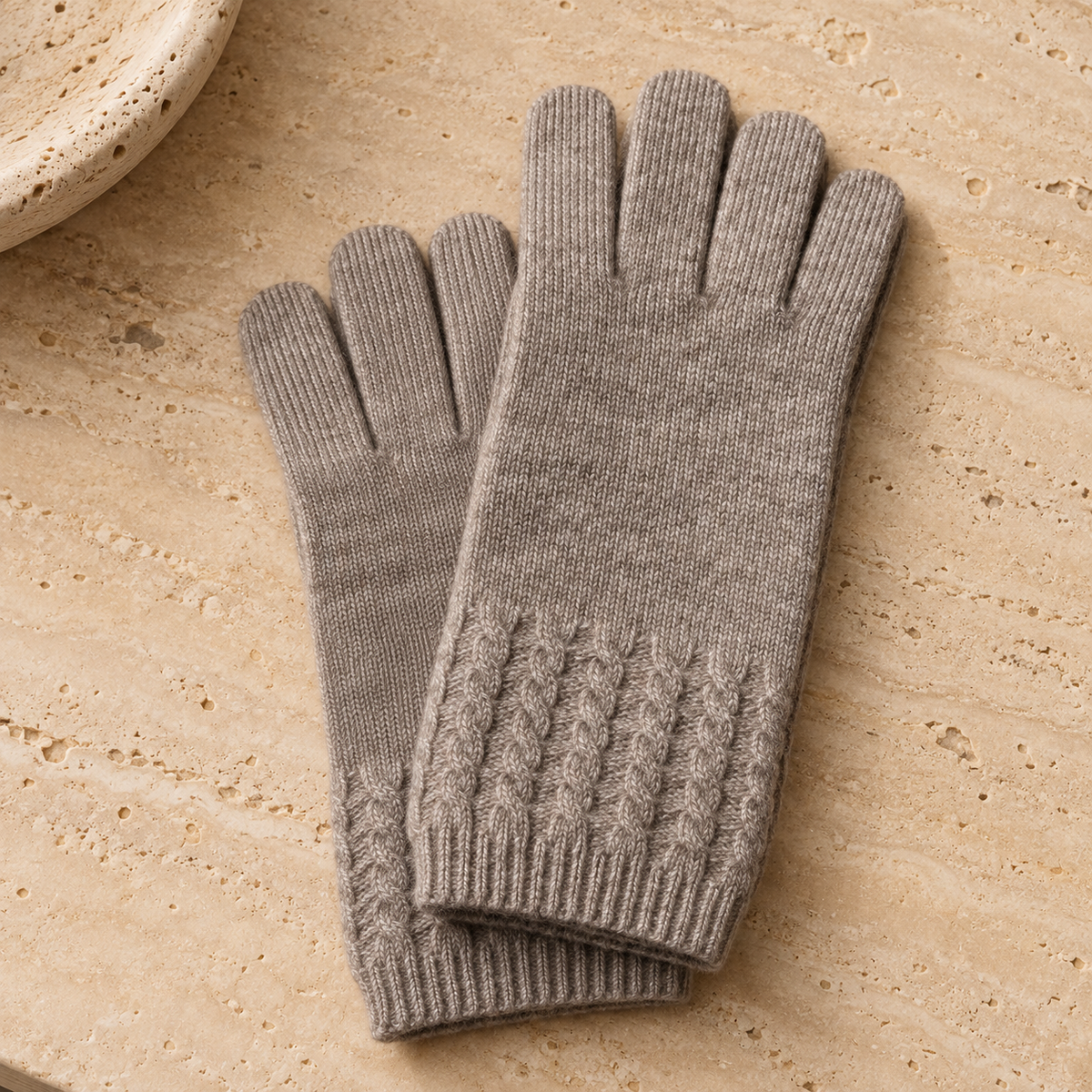
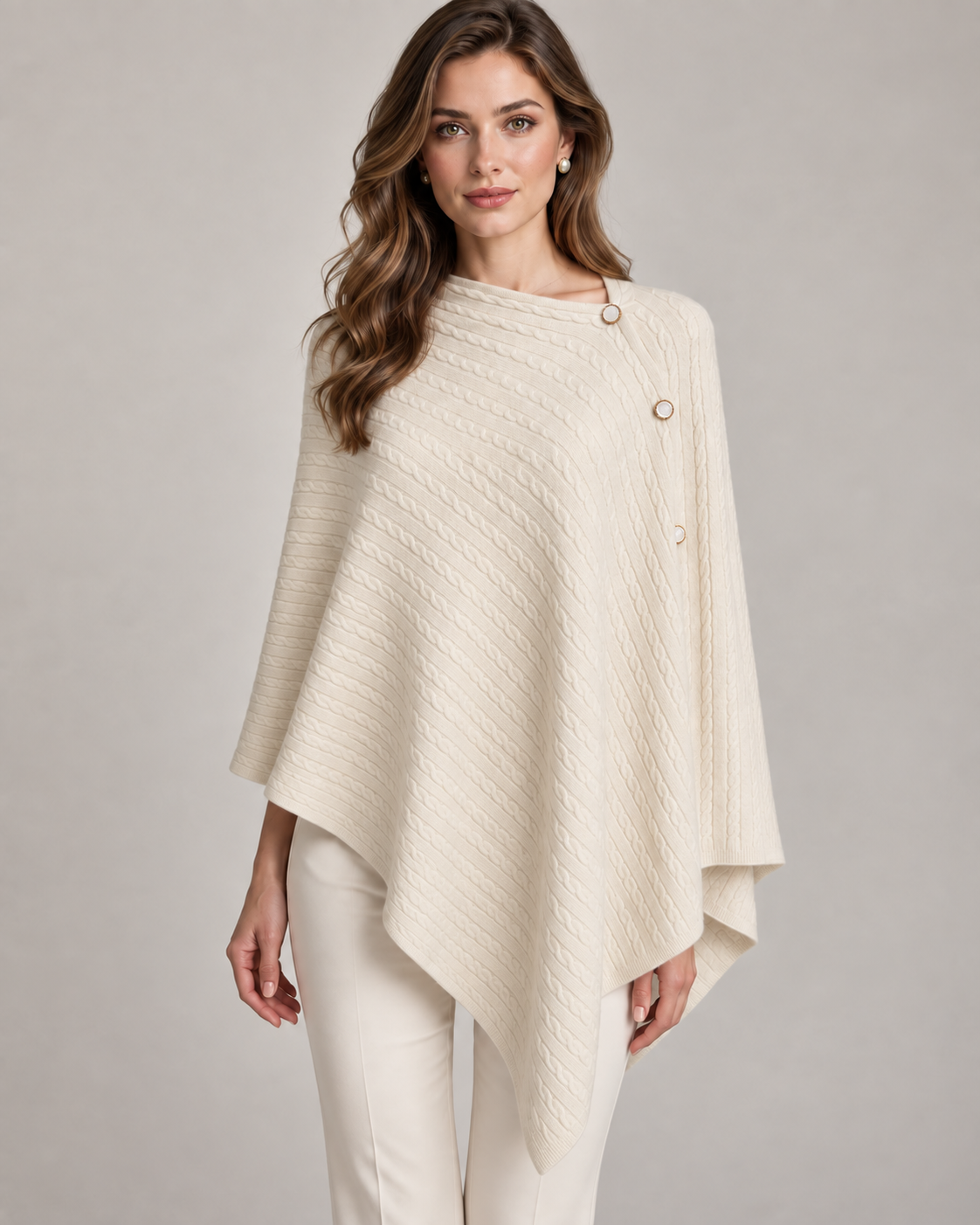

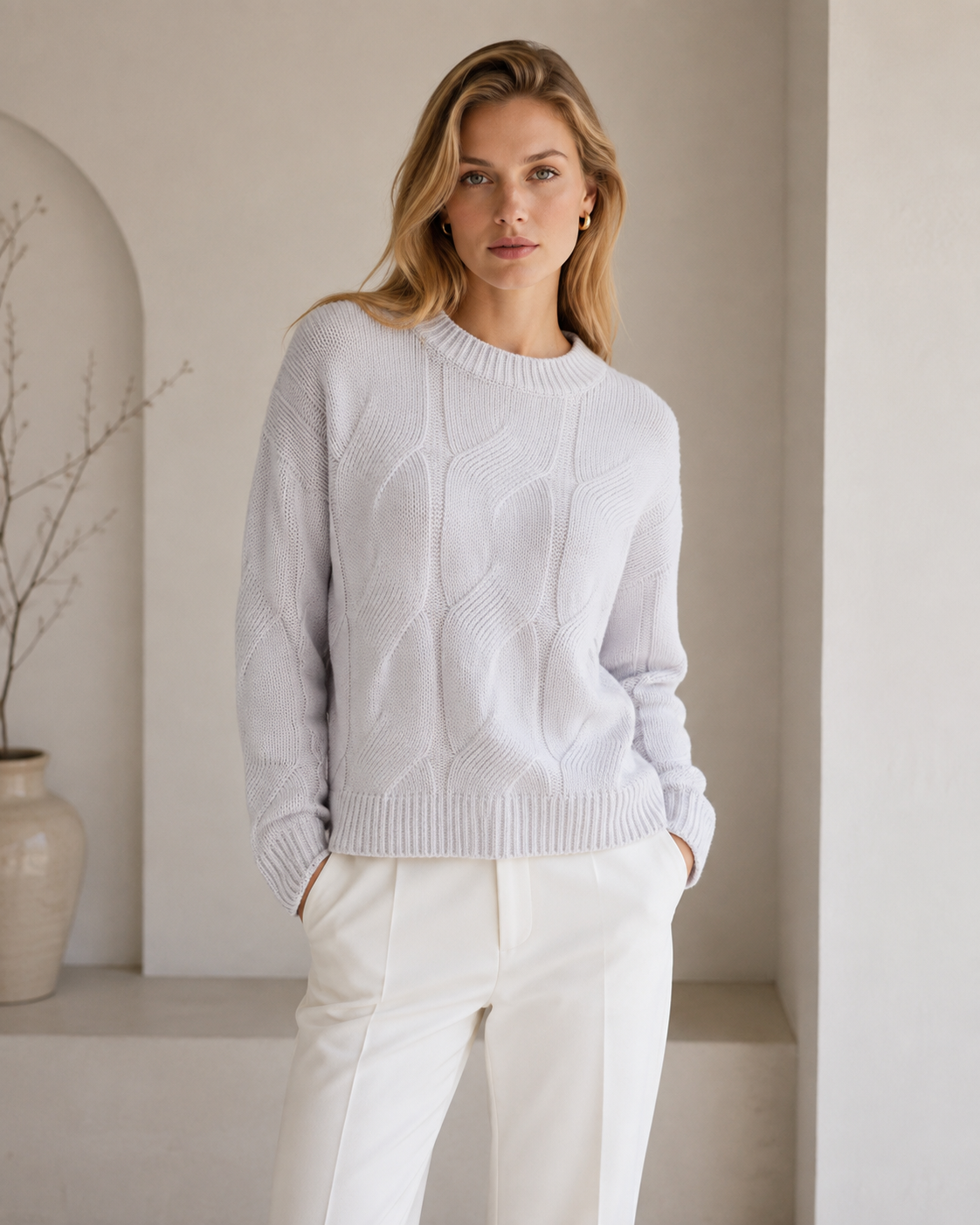
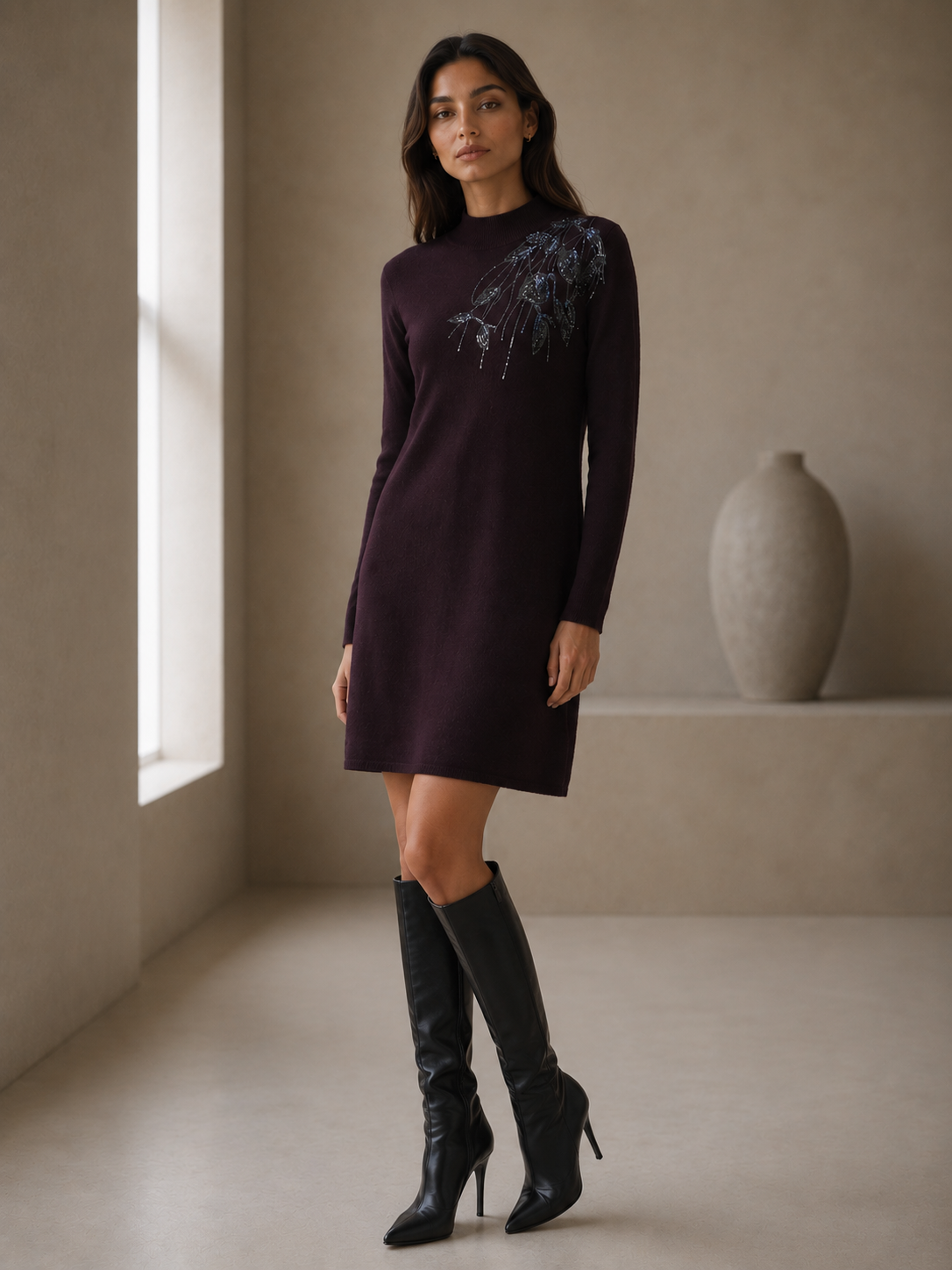







How to Spot Quality Cashmere Before You Buy

A beautiful cashmere sweater should feel like a relief the moment it slips on: warm without weight, soft without feeling fragile, and polished enough to become part of your regular rhythm. Knowing how to spot quality cashmere makes that feeling easier to find - and helps you choose pieces that continue to earn their place in your wardrobe long after the first wear.
Cashmere is often treated as a single standard of luxury, but its quality varies considerably. Fiber length, fineness, yarn preparation, knit construction, and finishing all shape how a garment feels now and how it performs over time. The goal is not simply to find the softest piece in the store. It is to find cashmere with substance, resilience, and quiet elegance.
Start With the Fiber Content
The label is the most practical place to begin. A garment labeled 100% cashmere contains cashmere fiber alone, while a blend combines it with fibers such as wool, silk, cotton, or synthetic materials. Neither choice is automatically wrong. A thoughtful blend can add drape, shine, structure, or easier care. But if you are seeking the classic insulating lightness of pure cashmere, the label should say so clearly.
Be wary of vague descriptions such as cashmere feel or cashmere touch. These phrases describe an impression, not a fiber composition. A reputable garment will identify its materials plainly and provide care guidance that matches them.
The source of the fiber can be meaningful, but it is not a complete measure of quality. Mongolian cashmere, for example, is widely respected, yet a fine garment still depends on careful sorting, spinning, and knitting. Place of origin tells part of the story. The finished piece tells the rest.
Fine fibers matter, but length matters too
Cashmere comes from the soft undercoat of cashmere goats. The most prized fibers are fine in diameter, often discussed in microns, which contributes to that signature softness against bare skin. Yet finer is not always the whole answer. Longer fibers are also valuable because they can be spun into smoother, stronger yarns with fewer loose ends.
Shorter fibers tend to work their way to the surface more quickly, creating fuzz and pills. A well-made cashmere piece uses carefully selected fibers and yarns designed to balance tenderness with durability. That balance is why some sweaters remain refined for years while others look tired after a handful of wears.
How to Spot Quality Cashmere by Touch
Touch is useful, provided you know what you are looking for. Run your hand across the knit and gently press the fabric between your fingers. Quality cashmere feels soft and inviting, but it should also have a certain spring. It should not feel overly wispy, slick, or artificially fluffy.
An extremely fuzzy sweater can be tempting at first touch. Sometimes that loft comes from brushing or finishing techniques that bring loose fibers to the surface. It may feel extraordinarily soft in the moment, then pill sooner because those surface fibers have little stability. Look instead for a smooth, even surface with a gentle bloom rather than a cloud-like halo.
Then hold the garment up to the light. A lightweight cashmere knit can be intentionally airy and elegant, especially for layering or travel. Still, the stitches should appear consistent, without thin, irregular patches that suggest weak yarn or an underdeveloped knit. If the piece is meant to be substantial, it should feel substantial in your hands.
Give the knit a gentle recovery test
Lightly stretch a small area of the sweater, then release it. Good cashmere has elasticity and should return close to its original shape. If the knit stays distorted or seems to sag immediately, it may lack sufficient structure.
This is especially worth checking at cuffs, hems, necklines, and pockets. These are the places that work hardest in daily wear. Ribbing should recover neatly rather than flare or ripple, and a cardigan front should lie flat without pulling or twisting.
Look Closely at Construction
The most enduring details are often the quietest. Turn a garment inside out and inspect the seams. They should be tidy, flat, and secure, without dangling threads or bulky joins. On a fine knit, the shoulder seam should sit smoothly and support the garment's shape rather than bunching under a jacket or slipping off the shoulder.
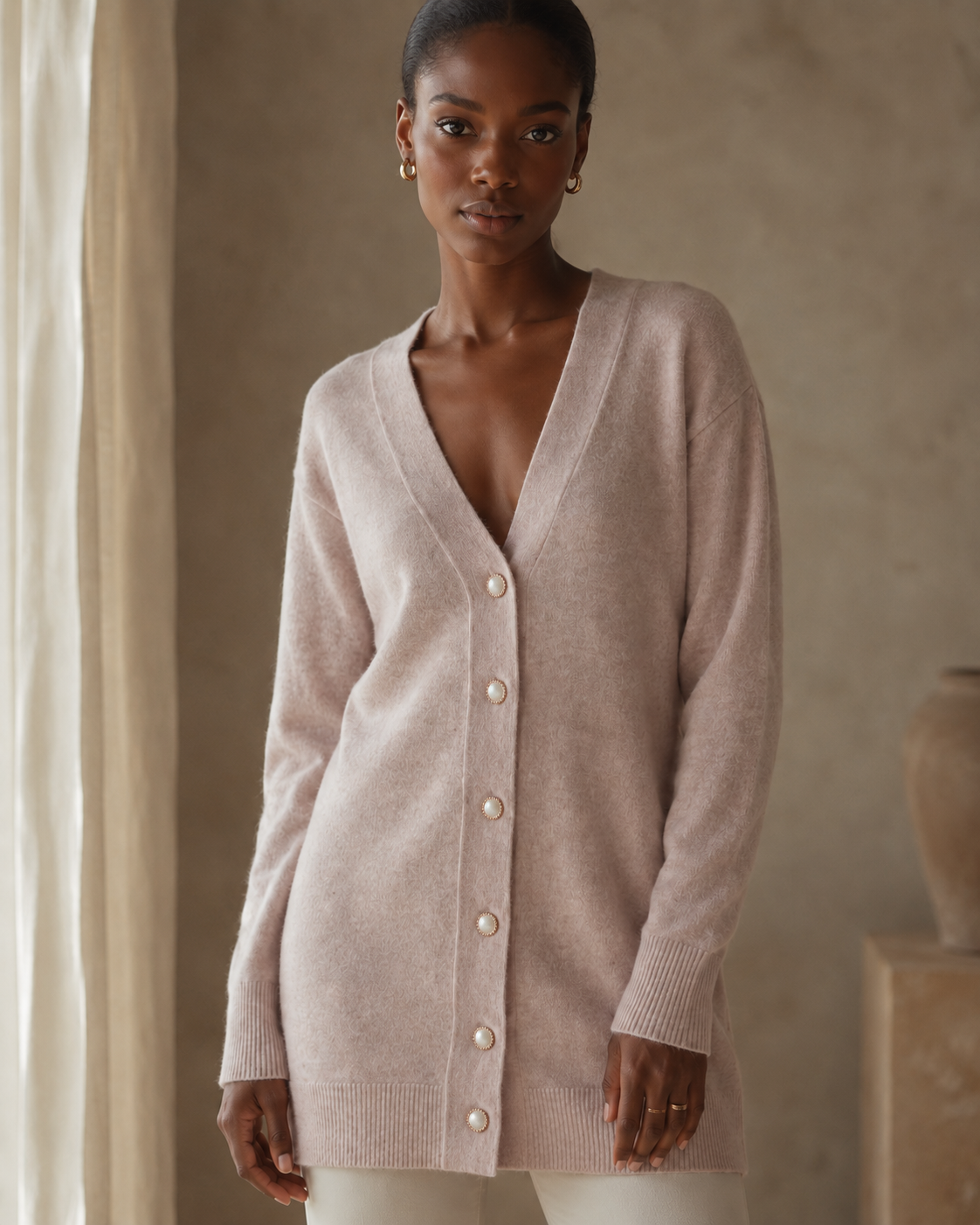
Pay attention to the neckline as well. A well-finished crewneck, V-neck, or turtleneck has clean edges and a balanced shape. It should feel considered, not merely cut from a basic pattern. For cardigans, inspect the button band. It should be stable enough to hold its line when buttoned, with buttons that are securely attached and buttonholes that do not look stretched.
Gauge is another helpful clue. Gauge refers to the number of stitches in a given area of knit. A higher gauge often creates a finer, smoother surface, while a lower gauge creates a more textured or substantial knit. Neither is inherently superior. A featherweight crewneck and a lofty winter cardigan are built for different moments. What matters is whether the gauge suits the garment's intended use and is executed evenly throughout.
Do Not Judge Quality by Ply Alone
Two-ply cashmere is often presented as a shortcut to quality, but ply simply describes how many yarn strands are twisted together. A two-ply sweater can be beautiful and durable, while a one-ply knit can be exquisitely light and refined. Conversely, a higher ply count cannot rescue inferior, short fibers.
Think of ply as part of the garment's character. More plies can create warmth, weight, and strength, making them appealing for outer layers, travel wraps, and cold-weather sweaters. A single-ply or finer construction may be ideal for a sleek layer beneath tailoring or for the changing temperatures of a flight. Choose according to how you plan to wear the piece, not according to a number alone.
Understand Pilling Before You Buy
Pilling is not proof that cashmere is poor quality. Even exceptional natural fibers can pill where friction is unavoidable: beneath the arms, along a handbag strap, or at the sides of a sweater. Cashmere is a delicate fiber, and a little early pilling can occur as loose fibers shed from the surface.
The difference is in the degree and duration. Better cashmere generally settles after the first few wears and responds well to gentle maintenance. Heavy, persistent pilling across the entire garment may point to shorter fibers, a loosely spun yarn, or a finish designed for instant softness rather than longevity.
A cashmere comb or fabric shaver used with a light hand can keep a favorite knit looking fresh. Avoid pulling pills off by hand, which can tug at the surrounding fibers. Proper care also matters: allow your sweater to rest between wears, hand wash or use a delicate cycle according to its label, and dry it flat away from direct heat.
Consider Price With a Clear Eye
Cashmere is not inexpensive to produce well, and a remarkably low price should invite closer inspection. Still, price alone does not guarantee excellence. Brand overhead, distribution, styling, and marketing can all influence a retail price.
Instead of searching for the most expensive option, look for evidence of value: transparent fiber content, an even knit, careful finishing, a thoughtful fit, and a design you will wear often. A classic neutral crewneck, a softly structured cardigan, or a generous wrap may offer more lasting value than an elaborate piece that only suits one occasion.
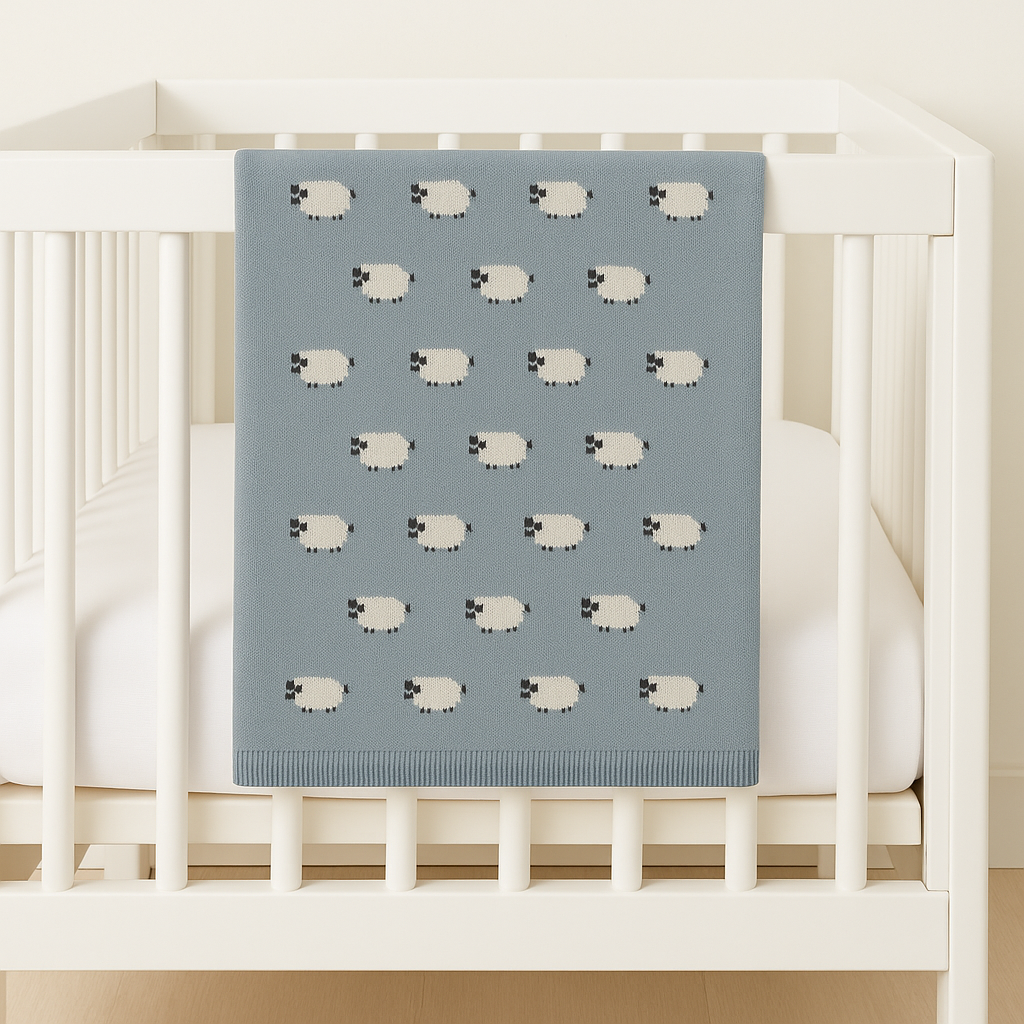
For gifts, quality is especially meaningful. A scarf or baby blanket should feel gentle, but it should also be finished securely enough to become part of everyday life rather than something kept away for fear of wearing it out.
Let Fit Reveal the Garment's Future
Try cashmere on with movement in mind. Raise your arms, sit down, and notice whether the shoulders remain comfortable and the hem returns to place. Fine knitwear should skim the body with ease, not strain at the seams or collapse into excess fabric.
The right fit depends on the silhouette. A relaxed sweater can still look precise when its shoulders, sleeves, and neckline are proportioned well. A fitted cashmere dress should feel supportive without being restrictive. Because cashmere is naturally adaptable, it becomes even more elegant when the cut allows it to move with you.
The best cashmere rarely needs to announce itself. It is the piece you reach for on an early flight, before an important meeting, or when an evening calls for warmth with a little more grace. Choose it slowly, care for it thoughtfully, and let its beauty become familiar.
